
Blog/Ferret
Ferret and Hamster Cages: Why Small Habitats Smell Faster
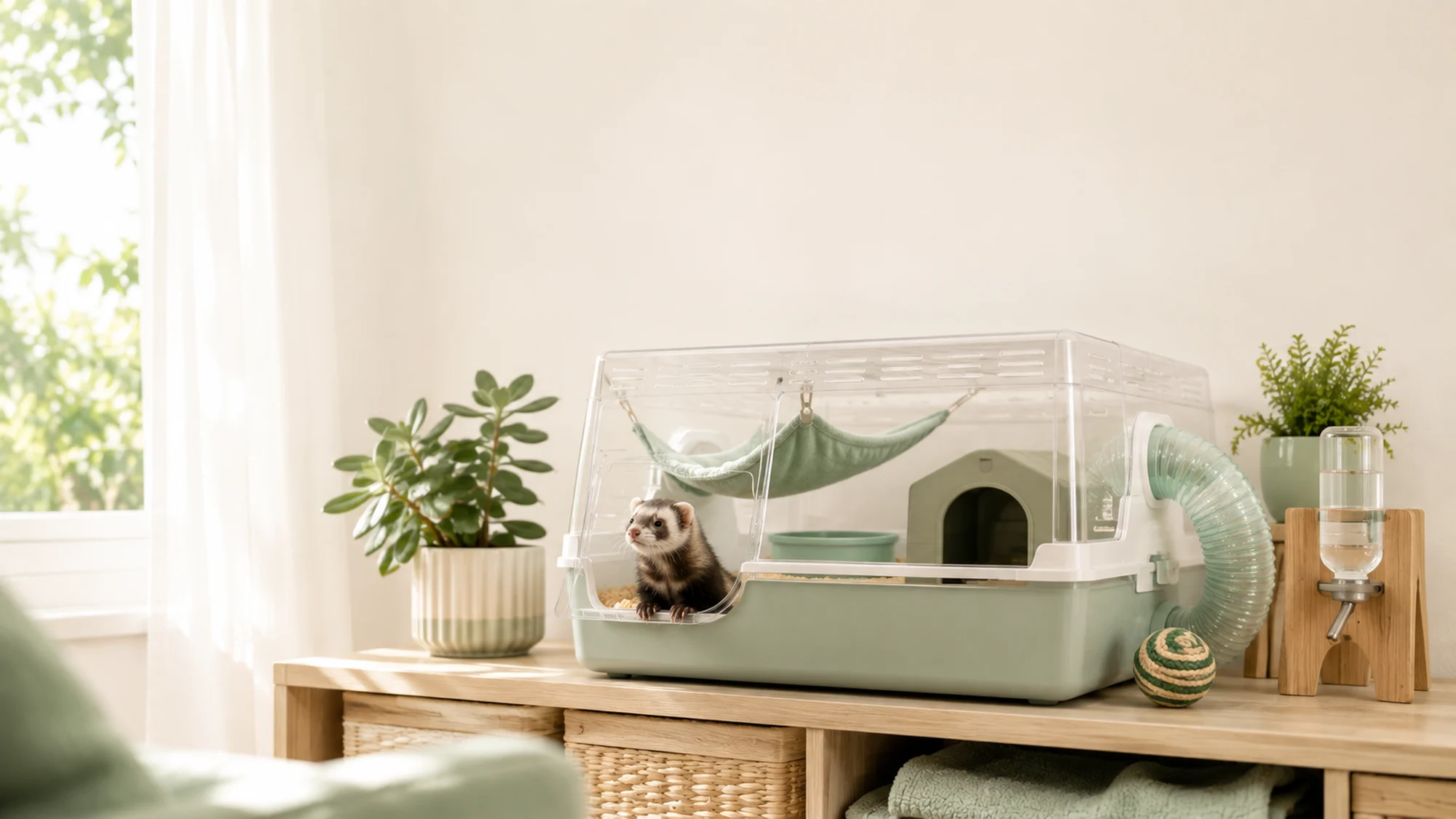
A small habitat concentrates everything. Why ferret and hamster cages turn faster, and a cleaning rhythm that keeps up without stressing the animal.
A dog spends part of its day outside the house. A ferret or a hamster spends all of it inside a box measured in inches. Everything that happens, happens in that space — which is why a habitat that looked fine on Sunday is noticeable by Wednesday.
Small space, no dilution
- Bedding absorbs and holds, and it sits inches from where the animal sleeps
- Corners get used as bathrooms, so odor concentrates in one or two spots rather than spreading
- Plastic trays and tubes hold a film that a dry wipe does not remove
- Hammocks and fabric hides take body oil the way a dog bed does, at a fraction of the size
Ferrets are their own case
Ferrets have a natural musk that no cleaning removes, and that is normal — it is the animal, not the cage. What cleaning controls is everything on top of it: the litter corner, the bedding, the hammock and the tray. Judge your routine by whether the habitat smells like a clean ferret, not by whether it smells like nothing.
A rhythm that keeps up
- Spot the bathroom corner daily — it is one corner and it takes a minute
- Bedding out on a fixed schedule, not when you finally notice
- Hammocks and fabric hides in the wash with the bedding; they hold more than they look like they do
- Wipe trays and tubes when they are empty and dry, which is the only time you can reach them
- Let everything dry completely before the animal goes back in
Where a spray fits
On the empty tray, the wiped corner and the bare surfaces — never on the animal, and never on bedding it is about to sleep in while still damp. Treat, let it dry fully, then rebuild the habitat.
G-SCRUB FRESH makes a Ferret Odor Control and a Hamster Odor Control for exactly these enclosures, sized for the surfaces rather than a room.