
Blog/Shoe Care
How to Clean Golf Shoes: Step-by-Step Guide (2026)
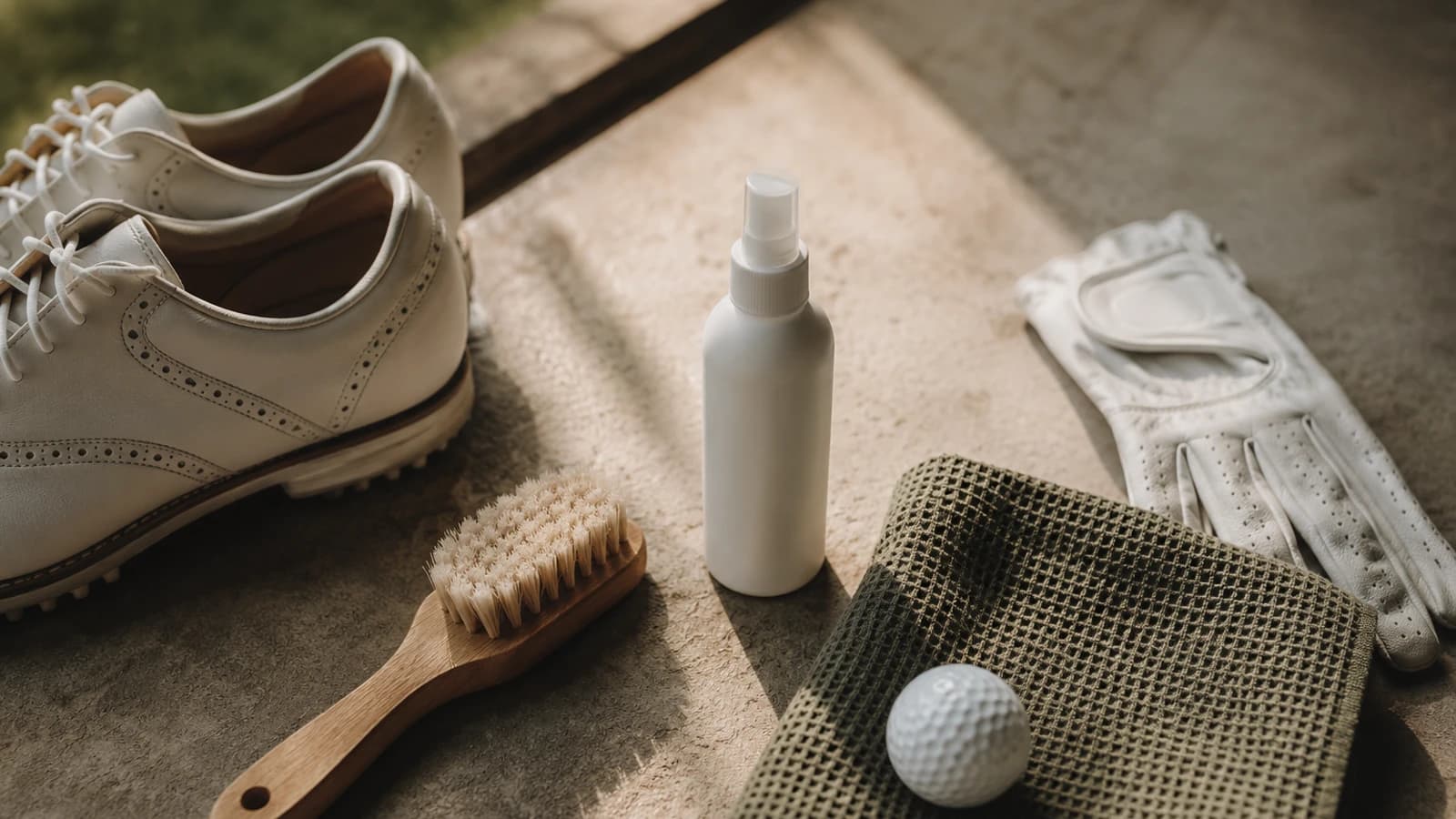
How to clean golf shoes by hand in 3 steps: foam, scrub, wipe. Plus mud, spikeless soles, how often to clean and how to dry golf shoes safely.
A round of golf is hard on shoes: grass, mud, sand, sun. But a surprising amount of the damage happens afterward, in how the shoes are cleaned and dried. The wrong product, too much force, or a heater vent can do more lasting harm than eighteen holes ever will. This guide puts the whole routine in one place: what you need, the three-step clean, how often to do it, how to handle mud and spikeless soles, how to dry shoes properly, and the mistakes worth avoiding.
How to clean golf shoes: the short version
- Knock off loose dirt and mud and clear the tread or spikes.
- Foam: apply a foaming golf shoe cleaner to the dirty areas.
- Scrub: brush in one direction with light, even pressure.
- Wipe: lift the foam and dirt off with a separate clean towel.
- Dry: insoles out, laces loose, paper inside, at room temperature. No heaters, no direct sun.
Below is each step in detail, plus how often to clean, how to handle mud and spikeless soles, and the mistakes that wear golf shoes out faster than the course does.
What you need
You do not need a full detailing setup. A short list covers almost every round, and all of it fits in a golf bag.
- A concentrated foaming cleaner that goes directly onto the brush or the shoe, so you do not need a bucket or a bowl of water
- A brush with bristles firm enough for tread and gentle enough for the upper
- A separate towel for wiping, not the one you use for your hands or clubs
- Dry paper towel or newspaper for the drying step
- A second pair of shoes if you play often, so one pair is always fully dry
The 3-step routine: foam, scrub, wipe
Step 1, foam. Apply the foaming cleaner directly to the dirty areas. You do not need to cover the whole shoe if only the toe box and outsole took the hit. The foam starts loosening dirt and grass residue before a brush ever touches the shoe.
Step 2, scrub. Brush in one direction with light, even pressure. One-directional strokes lift dirt out and away from the material. Hard back-and-forth scrubbing tends to push dirt deeper into mesh and stitching, and it wears the surface faster than the dirt would have.
Step 3, wipe. Use a separate towel to wipe away the foam and the lifted dirt. This is the step people skip, and it is the one that actually removes the grime instead of spreading it around.
The order matters. Foam first means you are never scrubbing dry dirt straight into the material. Scrubbing before wiping means the towel is picking up loosened dirt instead of fighting stuck-on residue.
Clean right after the round, not before the next one
Golfers tend to fall into one of two habits: a quick check before teeing off, or a cleanup after the round. Both have a place, but they solve different problems.
A pre-round check is about starting clean. A quick wipe, a lace check and a glance at the outsole take thirty seconds, and you are not carrying yesterday's dried mud onto today's course. It is maintenance, not repair.
Post-round care is where the real work happens. Grass, dirt and mud are still fresh, so cleaning takes a fraction of the effort it will take tomorrow, and it prevents long-term staining. If you only have time for one, pick post-round. Skipping it means every pre-round check starts from a worse baseline, while doing it keeps the pre-round check quick.
The best time is the moment you get back to the car, before anything has time to dry and set.
How often to clean golf shoes
There is no single right number, but there is a wrong habit: waiting until the shoes look bad enough to bother. By then, grass stains and cart-path dust have had days to set, which makes them harder to lift.
A rule of thumb that holds up: a quick wipe-down after every round, and a fuller clean with the brush and a proper foam pass about once a week if you play regularly. The difference between wiping shoes the same day and letting a week of rounds pile up is the difference between a 90-second job and a stubborn multi-stain scrub.
Signs you are overdue:
- Grass or mud has dried and hardened instead of just sitting on the surface
- The light-colored parts of the shoe look slightly gray or dull from buildup
- There is a faint smell that was not there a week ago, usually moisture trapped from an unwiped round
- A stain that appeared yesterday is already harder to move than it was fresh
Can you clean too often? Not from the cleaning itself, but technique matters. Scrubbing hard every day on the same spot can wear the material faster than the dirt would. The answer is not to clean less. It is to clean gently and consistently instead of aggressively and rarely.
How to remove mud from golf shoes
Mud is a different problem than grass or dust. It packs into the tread, works into stitching seams, and dries into a hard shell that is much harder to move than it was when wet. The biggest mistake is tossing muddy shoes in the trunk and dealing with them later. Wet mud brushes off. Dried mud has to be broken up first, which means more scrubbing and more risk of scuffing the material.
The order that works:
- Knock off loose, wet mud first with a firm tap or a dry brush pass, before any cleaner touches the shoe
- Apply foaming cleaner to what is left, focusing on the tread and any seams where mud packed in
- Brush in one direction to work it out of the tread pattern instead of pressing it further in
- Wipe with a separate towel, then check the outsole grooves specifically, since that is where mud hides longest
If the mud has already dried, do not scrape it off dry. A hard edge pulls at stitching and scuffs the material. Dampen the dried mud first so it softens, then work through the same routine. It takes a little longer, but it is gentler than forcing it off.
Cleaning spikeless golf shoes
Spikeless shoes look more like sneakers, and many golfers clean them like sneakers. The upper is often similar to athletic mesh or knit, but the outsole is a different story. Those small rubber traction lugs pack dirt and grass across the entire sole, and unlike a cleat you can twist out and inspect, there is no single spot to focus on.
- Foam the outsole first. The traction pattern holds more debris than it looks like from above
- Use a brush stiff enough to reach into the lug pattern, not just skim the surface
- Work the upper separately with lighter pressure, since knit and mesh uppers tolerate less scrubbing
- Check between the lugs before calling it done, because that is where residue gets left behind
With a knit or mesh upper, let the foam do the lifting rather than leaning on the brush.
Why hand-cleaning beats the washing machine
It is tempting to throw dirty golf shoes in with a load of laundry. It is also a good way to warp the sole, loosen the glue holding panels together, or leave the whole shoe smelling like wet fabric for days. Golf shoes are built from mixed materials, including panels, mesh, foam midsoles and sometimes cleats, and a machine is hard on all of them at once.
Hand-cleaning lets you treat the upper differently than the outsole, spend more time on a stubborn spot without over-processing the rest, and skip the multi-hour dry that a machine wash requires. The insole and midsole foam are the parts most likely to be damaged by a machine, so clean the upper and outsole and give the inside a quick wipe.
Do you need a special golf shoe cleaner?
Not always, but it helps more than most golfers expect. A lot of household cleaners will lift dirt off a shoe just fine for a single clean. The difference shows up over a season of repeated use.
Dish soap and all-purpose sprays are made for grease on hard surfaces, not for weekly contact with the mix of materials in a golf shoe. Used once, that is rarely a problem. Used every week, harsh or heavily fragranced products can leave residue that attracts more dirt, and bleach and strong household cleaners can discolor material and weaken the glue on synthetic uppers.
A purpose-built option gives you a few practical things:
- A direct-to-brush foam format, which means less mess and more control than a spray or a diluted bucket
- A formula made for the mix of materials in one shoe instead of a single surface type
- Consistency, so you are not guessing whether this month's household cleaner matches last month's
- A product that is safe for most common golf shoe materials when used as directed
For a single casual wipe before a round, plain water and a soft cloth is enough. The case for a dedicated cleaner is about the routine, not any one Saturday.
How to dry golf shoes without ruining them
The drying step undoes more shoes than the cleaning ever will. Direct heat pulls moisture out too fast and unevenly. Material dries tight and stiff, adhesives that hold the sole soften, and mesh and knit uppers can shrink out of shape. A hot car trunk, a radiator, a hair dryer and a sunny windowsill all do the same damage in different amounts.
- Knock off loose dirt and wipe away surface grime first, so it does not dry into the material
- Pull out the insoles and loosen the laces so air can move through the shoe
- Stuff each shoe with dry newspaper or paper towel to pull moisture from the inside out
- Let them dry at room temperature, away from any heat source
- Swap the damp paper for fresh paper after an hour or two if the shoes were soaked
A properly soaked pair can take a full day to dry from the inside, so give them time. This is where a second pair pays off: you never have to rush or reach for a heat shortcut. Also clean before you dry. Dried-in mud and grass are far harder to remove later, and trapped dirt holds moisture against the material.
Five golf shoe care mistakes to avoid
- Using whatever is under the sink. Dish soap, all-purpose cleaner and glass cleaner were not made for golf shoe materials, and repeated use can cause trouble over a season
- Scrubbing hard on a stain. Aggressive back-and-forth force usually grinds a fresh stain deeper instead of lifting it
- Drying shoes in direct heat. A hot trunk, sunny windowsill or heater vent accelerates the damage you are trying to prevent
- Soaking instead of spot-cleaning. Submerging or hosing down a shoe can force water into the midsole foam and internal seams, where it does not dry evenly
- Waiting until it is bad. Letting dirt set for days means every clean starts from a harder position and takes more scrubbing
Smell is a separate problem from dirt, and it has its own causes and fixes. If your shoes are clean but still smell, the dedicated odor guide linked below covers it in depth.
Frequently asked questions
Can I put golf shoes in the washing machine?
It is better not to. A machine is hard on mixed materials at once, and it can warp the sole, loosen glue and leave shoes damp for a long time. A hand clean with foam, a brush and a towel gets the job done with far less risk.
How long do golf shoes take to dry?
A properly soaked pair can take about a full day at room temperature. Remove the insoles, loosen the laces, stuff them with dry paper and keep them away from heat.
Is it okay to clean golf shoes with dish soap?
Follow your shoe manufacturer’s care instructions: some specify mild soap for particular materials. Check the cleaner label and test a hidden area. If choosing G-SCRUB, use a shoe cleaner rather than Club Foam, which is for metal club heads.
My golf shoes are clean but still smell. What now?
Odor usually comes from moisture and what is trapped inside the shoe, not from surface dirt. Our dedicated guide covers what works.