
Blog/Pet House
The Pet House Nobody Ever Cleans
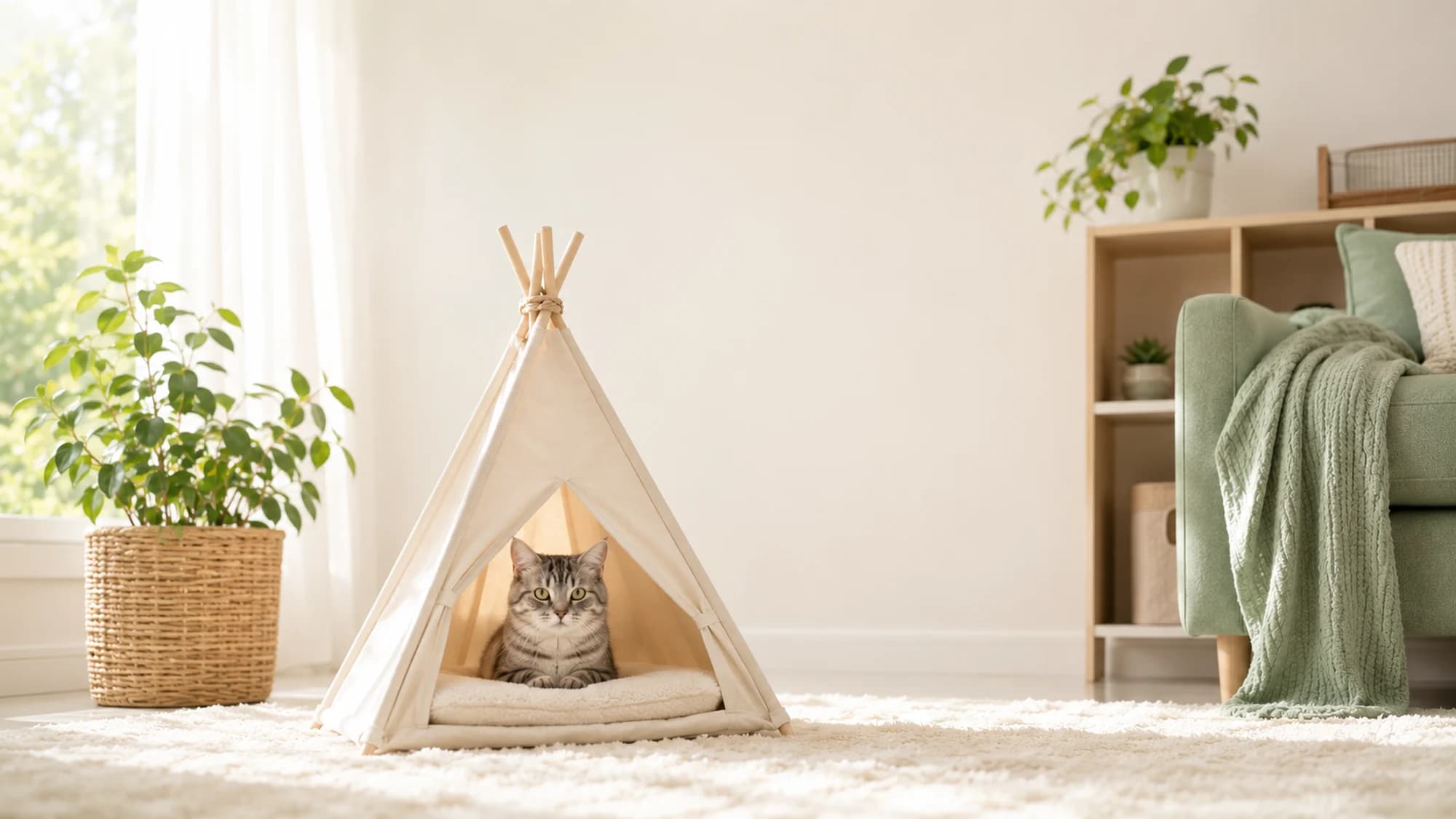
Indoor pet houses, teepees and covered beds get slept in every night and washed almost never. Why the enclosed shape makes it worse, and how to keep up.
The bed gets washed. The blanket gets washed. The little canvas teepee in the corner — the one they actually sleep in every night — has been there since you bought it.
Enclosed means it never airs out
An open bed dries between naps. A house does not. The same fabric holds warmth, breath and body oil in a space with almost no airflow, and it stays slightly damp far longer than an open surface. That is the whole reason a pet house turns faster than the bed sitting next to it.
- The cushion inside, which takes the most contact and the least air
- The inner walls at shoulder height, where they lean and rub
- The floor panel, which is usually not removable
- The frame poles or seams, where fabric bunches and stays damp
Why they still use it when it smells
Their own scent is a feature, not a bug — it is what makes the spot theirs. That is worth knowing before you strip it back to nothing: a house that smells completely foreign can stop being used. The goal is controlling the buildup, not erasing every trace of them.
The routine
- Cushion in the wash on the same schedule as the bed cover
- Vacuum the inside — hair collects in the seams where the panels meet
- Treat the inner surfaces while the cushion is out and the house is empty
- Leave it open and let it dry fully; an enclosed shape traps damp better than it dries
- Put it back where it was — moving it and cleaning it at once is two changes at the same time
G-SCRUB FRESH Pet House Odor Control is made for these: indoor houses, teepees and covered hideaways, on the surfaces you can actually reach.